Floro Cubelo Among 36 Future of Care Work Awardees in Finland — the Only Awardee of Foreign Background
A meaningful milestone was reached today as Floro Cubelo, Chair of the Filipino Nurses Association in the Nordic Region (FiNAN), was recognized among the recipients of Finland’s Future of Care Work innovation initiative.
Memory Passport innovation recognized for its contribution to more person-centred dementia care
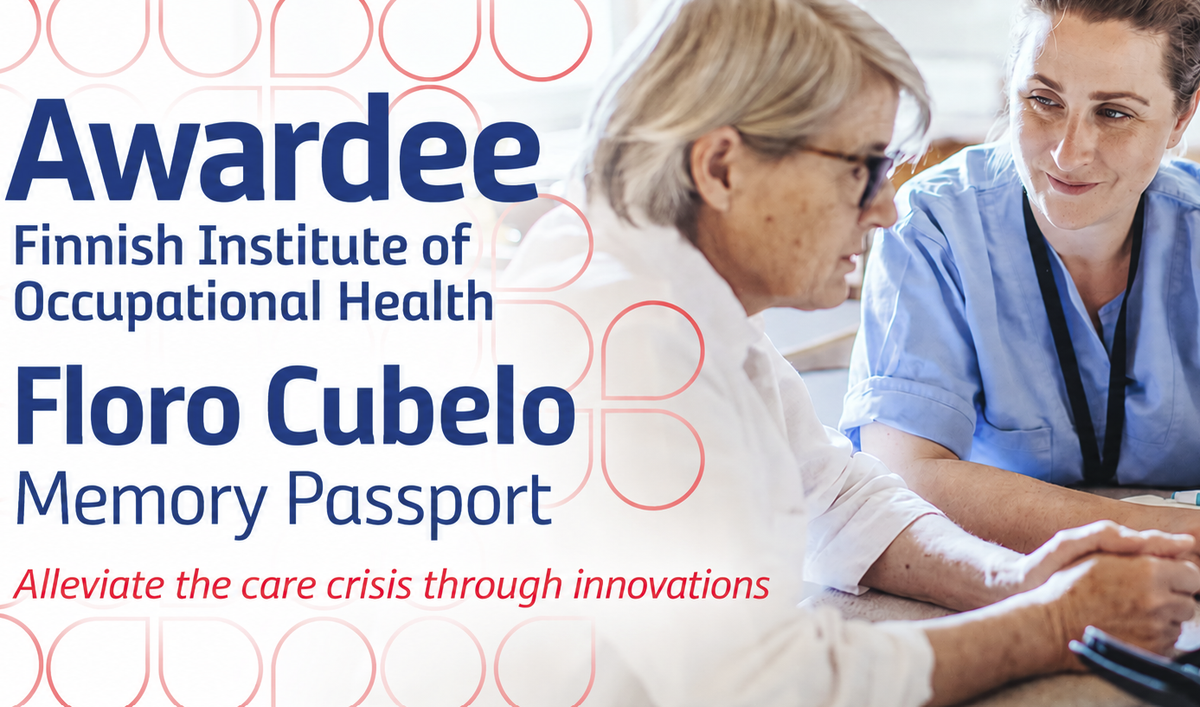
HELSINKI, Finland — September 17, 2026 — A meaningful milestone was reached today as Floro Cubelo, Chair of the Filipino Nurses Association in the Nordic Region (FiNAN), was recognized among the recipients of Finland’s Future of Care Work innovation initiative.
The recognition comes after 150 applicants were screened during the summer, with 36 innovations ultimately selected as awardees. Cubelo is the only awardee of foreign background among the 36 selected recipients, adding a personal dimension to an achievement that is ultimately centered on his work and its potential contribution to the future of care.
His recognized innovation, Memory Passport, is a simple, client-centred care tool developed to support older adults living with dementia, particularly those receiving care in nursing homes or through home-care services.
Rather than focusing only on clinical information, Memory Passport seeks to help caregivers see and support the whole person — including physical, mental and social wellbeing.
A simple tool for everyday care
Memory Passport is designed around the idea that meaningful care can happen through small, consistent and purposeful activities.
The tool supports the daily activation of physical, mental and social wellbeing of older adults. At the same time, it can help caregivers organize and document relevant information about the person's daily activities, condition and engagement.
For people living with dementia, continuity and familiarity can be particularly important. Memory Passport aims to help caregivers better understand the individual behind the care record — their interests, abilities, activities and everyday experiences.
The concept also recognizes the realities facing today's care services.
Time pressure, staff shortages and increasing documentation requirements can make it difficult for caregivers to devote as much time as they would like to meaningful interaction with residents and clients. Memory Passport seeks to address some of these gaps by bringing everyday activation and documentation together in a practical format.
Putting the person at the centre
At the heart of Memory Passport is person-centred care.
For an older person living with dementia, care is not only about medication, vital signs or completing a list of clinical tasks. It is also about maintaining relationships, encouraging activity, supporting independence and preserving a sense of identity and dignity.
Memory Passport provides a structure through which caregivers can encourage activities that engage different aspects of wellbeing.
Physical activities can encourage movement and participation. Mental activities can stimulate memory, thinking and concentration. Social activities can encourage interaction with caregivers, relatives and other residents.
The approach can also create opportunities for families to become more involved in understanding and supporting the person's everyday life.
Recognized under technology, policy and organization
Cubelo's work was recognized under the category focusing on technology, policy and organization-centred innovations.
The category reflects the broader purpose of the Future of Care Work initiative: finding new approaches that can help respond to the growing challenges facing care services.
The Finnish care sector, like many countries around the world, is facing increasing demand for services alongside workforce shortages and pressure on existing resources. Innovation therefore does not necessarily mean creating complicated technology. It can also mean finding simpler and more effective ways of organizing care and supporting the people who provide it.
Memory Passport represents this type of approach. Its focus is not on replacing the human relationship between caregiver and client, but on helping that relationship become more informed, consistent and meaningful.
From Stockholm Palace to Helsinki
The recognition in Helsinki also continues a journey that began internationally.
Two years ago, Cubelo's Memory Passport was presented and recognized through the Queen Silvia Nursing Award, an initiative associated with Queen Silvia of Sweden. The work was presented at the Royal Palace in Stockholm, placing his innovation on an international platform focused on improving nursing and care for older people.
That earlier recognition helped bring attention to an idea developed from nursing practice and the everyday realities of caring for older adults.
Two years later, the same work has received recognition in Finland, where Cubelo has continued his professional and academic work in nursing and care.
A journey from the Philippines to Finland
Cubelo's recognition also carries a personal story.
Originally from the Philippines, he has built his professional career in Finland and has worked in nursing education, leadership and the development of care for older adults.
As Chair of FiNAN, he is also part of a growing community of internationally educated nurses contributing to healthcare and nursing in the Nordic region.
Being the only awardee of foreign background among the 36 selected recipients is therefore a notable part of the story. But for Cubelo, the recognition can also be seen as an opportunity to highlight something larger than an individual achievement: the contribution that nurses, healthcare professionals and people from diverse backgrounds can make to developing care in Finland.
Innovation born from care
Memory Passport was not created simply as a technological project. It grew from an understanding of the everyday challenges experienced by older adults, families and caregivers.
Its underlying message is straightforward: better documentation should support better care, not take time away from it.
By connecting documentation with meaningful daily activities, the concept seeks to help caregivers maintain a more holistic view of the person they are caring for.
It also recognizes that good care depends on continuity. When information about a person's preferences, activities and wellbeing can be communicated more clearly, different caregivers and family members can have a better understanding of the individual's needs and experiences.
Looking toward the future of care
The selection of 36 innovations from 150 applicants demonstrates the breadth of ideas being explored around the future of care work in Finland.
For Cubelo, the recognition of Memory Passport is another step in a longer journey — from an idea developed around dementia care, to international recognition in Stockholm, and now to inclusion among Finland's selected Future of Care Work innovations.
The next stage will be about development, research and finding ways for promising ideas to contribute to real-world care.
The recognition is therefore not simply an endpoint. It is an invitation to continue asking how care can become more human, practical, sustainable and centred on the person.
For an innovation as simple in concept as Memory Passport, that may be its greatest strength: it begins with a fundamental question — how can we make everyday care better for the person receiving it, while also supporting the people providing it?
From the Philippines to Finland, and from Stockholm Palace to Helsinki, Cubelo's journey with Memory Passport continues to place that question at the centre of his work.
References
- Työterveyslaitos. (2026.). Huomisen hoivatyö -innovaatiot. Hoivatyön tulevaisuus (CAREFUTURE). Retrieved September 17, 2026, from https://www.ttl.fi/hoivatyon-tulevaisuus-carefuture/huomisen-hoivatyo-innovaatiot
- https://www.sciencedirect.com/org/science/article/pii/S1366366625000152