The Iceland Declaration of Filipino Internationally Educated Nurses: Inclusion, Patient Safety, and Professional Pathways
We, Filipino internationally educated nurses (FIENs) across the Nordic region, emphasize that inclusion is a workforce strategy, a patient safety imperative, and a core responsibility of leadership.
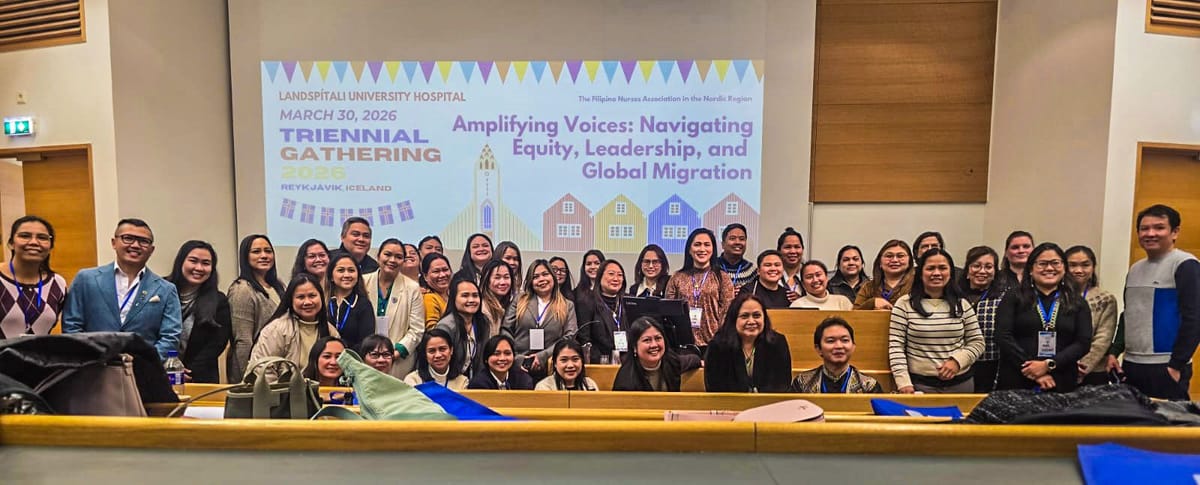
Date: March 30, 2026
Location: Landspítali University Hospital, Reykjavík, Iceland
We, Filipino internationally educated nurses (FIENs) across the Nordic region, emphasize that inclusion is a workforce strategy, a patient safety imperative, and a core responsibility of leadership.
1. Inclusion as a Workforce and Patient Safety Strategy
We affirm that:
- Inclusion directly impacts quality of care and patient safety
- A workforce that feels psychologically safe is more likely to communicate effectively, report errors, and collaborate across disciplines
- Sustainable healthcare systems depend on retention, wellbeing, and full participation of internationally educated nurses
Thus, inclusion must be embedded into organizational strategy, not treated as symbolic or secondary.
2. Leadership Responsibility and Psychological Safety
We call on healthcare leaders to recognize that:
- Inclusion is an essential leadership function, not an individual burden
- Leaders must actively reflect on their own assumptions, biases, and institutional norms
- Creating psychological safety is fundamental to safe and high-quality care
Leadership must move from expectation-setting toward actively enabling safe participation and contribution.
3. Organizational Accountability in Recruitment and Integration
We stress that institutions recruiting foreign nursing workforce must:
- Clearly define and communicate their workplace culture, expectations, and systems of practice
- Ensure nurses are not left to navigate implicit norms alone, but are properly oriented and supported
- Recognize that integration is a shared institutional responsibility
Recruitment without structured integration risks both patient safety and workforce sustainability.
4. From Standards to Support: Enabling Competence
We affirm that:
- Upholding standards must be matched with access to the tools required to meet those standards
- Institutions must provide:
- Structured language and communication support
- Mentorship and supervision systems
- Clear clinical and organizational guidance pathways
Accountability lies not only in expecting performance, but in enabling success.
5. Clear Pathways for Qualification Recognition and Career Progression
We call for the establishment of:
- Transparent, efficient, and fair credential recognition systems
- Clearly defined licensing and bridging pathways that reduce unnecessary delays and uncertainty
- Structured opportunities for career progression and specialization
We emphasize that:
- Internationally educated nurses should not be forced to expend disproportionate energy navigating unclear systems
- Instead, systems must be designed so nurses can focus on strengthening their professional and clinical language competencies, which are critical for:
- Patient safety
- Effective communication
- Professional growth
A well-designed system shifts the burden from surviving the process to thriving within the profession.
6. Professional Agency and Challenging Prejudice
We also recognize our responsibility as Filipino internationally educated nurses:
- To build confidence in professional voice and participation
- To actively challenge prejudice and inequitable practices
We affirm that:
Prejudices left unaddressed risk becoming normalized.
Thus, we commit to contributing to a professional culture grounded in equity, respect, and accountability.
Closing Statement
We call for a shift toward intentional, system-level inclusion, where:
- Leadership is accountable
- Institutions are enabling
- Pathways are transparent
- And professionals are empowered
Only through this approach can healthcare systems in Iceland and the Nordic region ensure safe, equitable, and sustainable care for all.